


Caps vs. Crowns vs. Covers
If you’ve ever looked up at your chimney and wondered what all those parts are called, you’re not alone. Caps, crowns, covers—it starts to sound like we’re talking about the same thing three different ways. We’re not. Each one has its own job, and if one of them fails, the chimney usually lets you know sooner or later. With that in mind, here’s a guide to Caps vs. Crowns vs. Covers.
 The Chimney Cap: Your First Line of Defense
The chimney cap sits right at the top of the flue. It’s usually metal and includes a small roof with mesh sides. Its main job is simple: keep things out.
Rain is the obvious one, but it also blocks leaves, debris, and animals. You’d be surprised how often birds or squirrels decide a chimney looks like a good place to move in. The mesh on the sides keeps them out while still allowing smoke to escape.
There’s also a safety angle. That mesh can help catch sparks before they float out onto your roof.
Without a cap, your chimney is wide open. Water gets in, debris builds up, and sooner or later, you’re dealing with problems that could have been avoided with a relatively simple piece of hardware.
The Chimney Crown: The Stalwart Protector
The crown is the concrete or mortar surface that sits atop the chimney structure. Think of it as the lid that seals off the top around the flue.
Its job is to direct water away.
A properly built crown has a slight slope, so when it rains, water runs off instead of pooling. It also extends a bit past the edges of the chimney to keep water from dripping straight down the sides.
When a crown is in good shape, you don’t notice it. When it’s cracked or worn, that’s when trouble starts. Water slips into those cracks, freezes, and expands (even in milder climates, this still happens over time), and the damage spreads.
Left alone, a damaged crown can lead to leaks inside the chimney and even into the home. It’s one of those parts that doesn’t get much attention—until it needs it.
Chimney Covers: A Broader Term with a Similar Goal
“Chimney cover” is a term that’s used in a couple of ways. Sometimes people mean the cap. Other times, they’re talking about a larger top that covers the entire chimney, especially on homes with multiple flues.
In that case, the cover is usually a metal panel spanning the entire top, with openings for each flue pipe.
The benefit is added protection. Instead of just covering one opening, it shields the entire chimney structure from rain. That helps reduce wear on the chimney crown and the masonry underneath.
It’s not always necessary for every home, but in the right situation, it adds another layer of defense against water—the number one enemy of chimneys.
Why These Parts Matter More Than You Think
All three—cap, crown, and cover—have one thing in common: they’re there to keep water out and protect the chimney from the elements.
When they’re doing their job, you don’t think about them. When they’re not, you start seeing the effects: stains, musty smells, crumbling mortar, rusted components.
The tricky part is that the damage usually starts small and out of sight. By the time it shows up inside your home, it’s been working its way in for a while.
Keeping Things in Good Shape
The good news is that these components can be inspected without much trouble, and most issues can be handled before they turn into major repairs.
A missing or damaged cap can be replaced. A cracked crown can often be sealed or rebuilt. A cover can be added if extra protection makes sense for your setup.
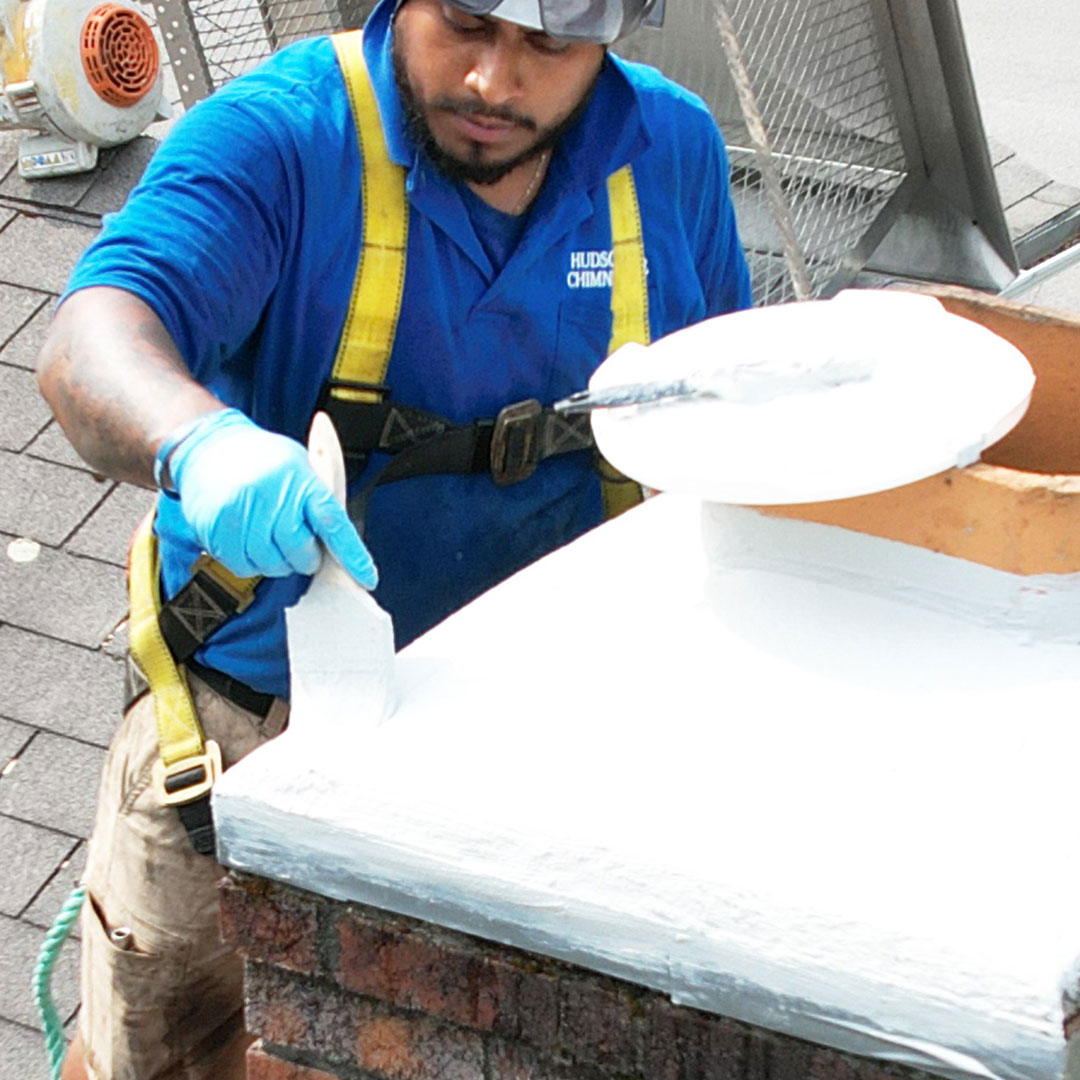 The key is knowing what condition everything is in. That’s where a routine inspection comes in. It’s a simple step that gives you a clear picture of what’s going on up there.
To Sum Up
Caps, crowns, and covers might not be the most exciting parts of your home, but they do most of the heavy lifting when it comes to protecting your chimney.
If everything is in good shape, you’re in a good spot. If something’s worn or missing, it’s usually worth addressing sooner rather than later.
Like most things with a house, a little attention now tends to beat a bigger chimney repair bill down the road.
Hudson Valley Chimney Can Help Decide What’s Best for Your Chimney
Get in contact with us today. We can help you decide what device is best for your chimney. Give your chimney extra protection, reach out now.