


Freeze-Thaw Warning: January’s Silent Killer
Winter is hard on everything, especially your chimney. One of the most destructive forces attacking chimneys in winter is the freeze-thaw cycle. It doesn’t sound so bad, but repeated freezing and thawing can cause significant damage, leading to leaks, flaking bricks, and costly repairs if you don’t stay on top of things.
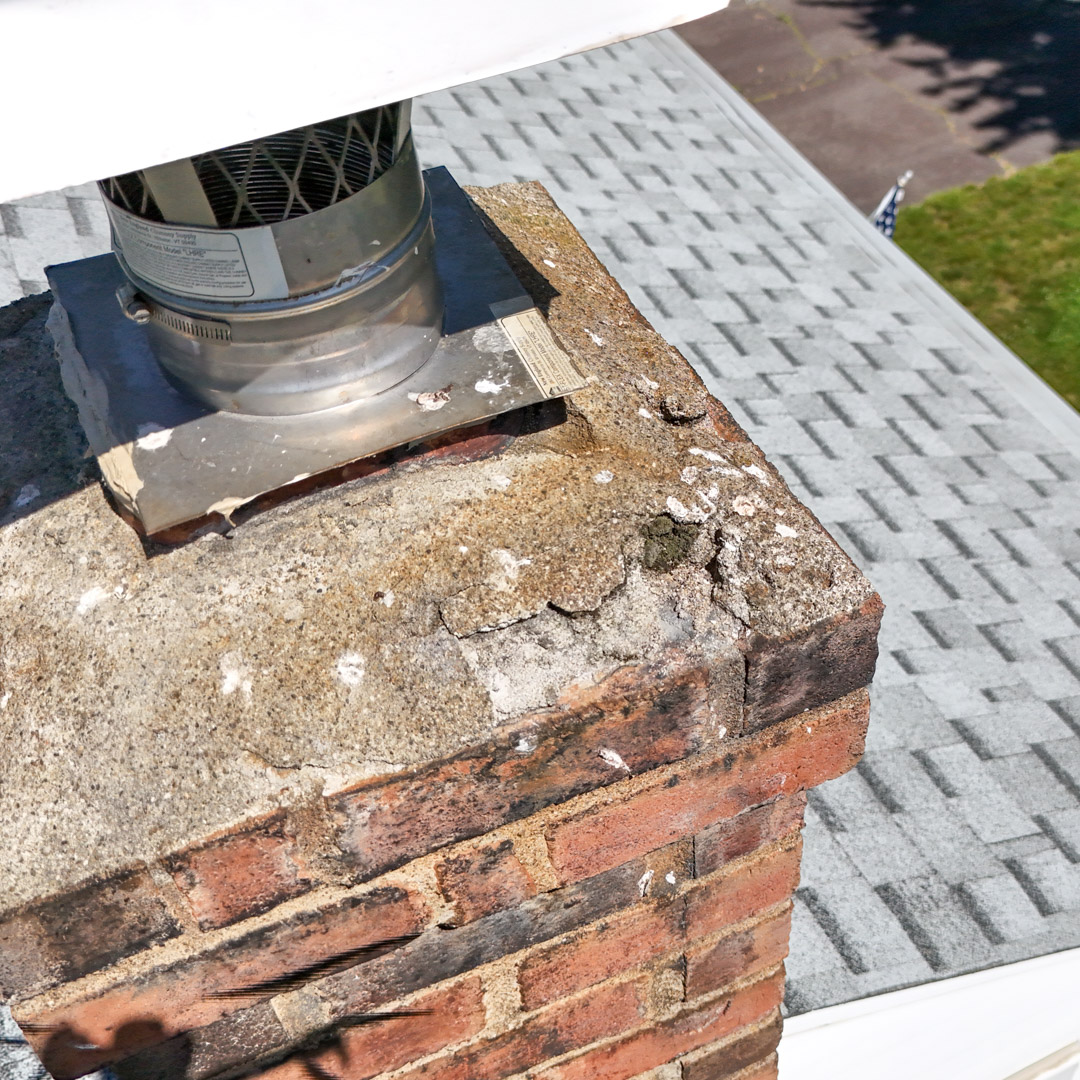
What is the Freeze-Thaw Cycle?
It occurs when water enters small cracks or porous materials, freezes when temperatures drop, expands, and thaws when temperatures rise. Water expands by approximately 9% percent when it freezes. The expansion puts pressure on whatever contains it, like brick, mortar, stone, or concrete. When the ice melts, the material contracts again, but doesn’t return to its original state. Over time, this repeated expansion and contraction widens cracks and weakens the structure.
Chimneys are vulnerable because they’re constantly exposed to the elements and are often made from masonry materials that naturally absorb moisture.
How the Freeze-Thaw Cycle Damages Chimneys
Cracked and Spalling Bricks
Bricks are porous, which means they absorb rain, snow, and melting ice. The trapped moisture freezes within the brick, and the pressure can cause the brick’s surface to flake or break off, a condition called spalling. Once spalling starts, the brick deteriorates much faster and typically needs to be replaced.
Deteriorating Mortar Joints
Mortar is usually softer than brick and often is the first material to fail. Freeze-thaw action causes mortar joints to crack, crumble, or wash away entirely. As mortar weakens, the bricks loosen, which creates a safety hazard and allows more water into the chimney.
Leaning Structure or Instability
In severe cases, ongoing freeze-thaw damage can compromise the chimney’s structural integrity. Missing mortar and damaged bricks can cause the chimney to lean, shift, or partially separate from the house.
Interior Water Leaks
Cracks caused by freezing and thawing allow water to penetrate deeper into the chimney, which can lead to leaks around the fireplace, stained walls or ceilings, damaged flue liners, and mold and mildew.
Crown and Flue Damage
The chimney crown is a slab that sits atop the chimney to divert water. The freeze-thaw cycle can cause it to crack. Once the crown fails, water can get into the chimney’s structure, accelerating flue and masonry damage.
Signs Your Chimney Might Be Affected
Common warning signs of freezing and thawing included cracked or missing mortar, flaking bricks, white staining on the masonry, loose bricks, rusted chimney components, or water leaks near the fireplace. These issues worsen rapidly after winter.
How to Protect Your Chimney from Freeze-Thaw Damage
Schedule an Annual Inspection
Annual chimney inspections allow professionals to spot small cracks and early-stage damage before it becomes expensive to fix. This is especially important after harsh winters.
Repair Mortar
Tuckpointing or repointing can fix mortar damage by replacing it with fresh mortar. This is important because properly maintained mortar joints help keep water out and extend your chimney’s lifespan.
Install or Repair the Crown
The crown should slope away from the flue and not have any cracks. Repairing or rebuilding a damaged or improperly constructed crown is one of the most effective ways of keeping water out.
Apply a Waterproofing Sealant
Breathable masonry waterproofing products repel water while allowing the moisture inside the chimney to escape. This significantly reduces the amount of water absorbed by bricks and mortar, limiting freeze-thaw damage.

Address Small Issues Early
Minor cracks or loose mortar might seem like a cosmetic issue, but they’re the entry point for water. Fixing minor problems as soon as possible prevents the damage from becoming more widespread and expensive to repair.
Hudson Valley Chimney is Your Go-To Chimney Expert
Is your chimney looking worse for wear? Does it need a good cleaning? No matter what you need, the pros at Hudson Valley Chimney are here to help. We’re the most trusted chimney and fireplace company in the Hudson Valley area with over two decades of experience. Call us today!